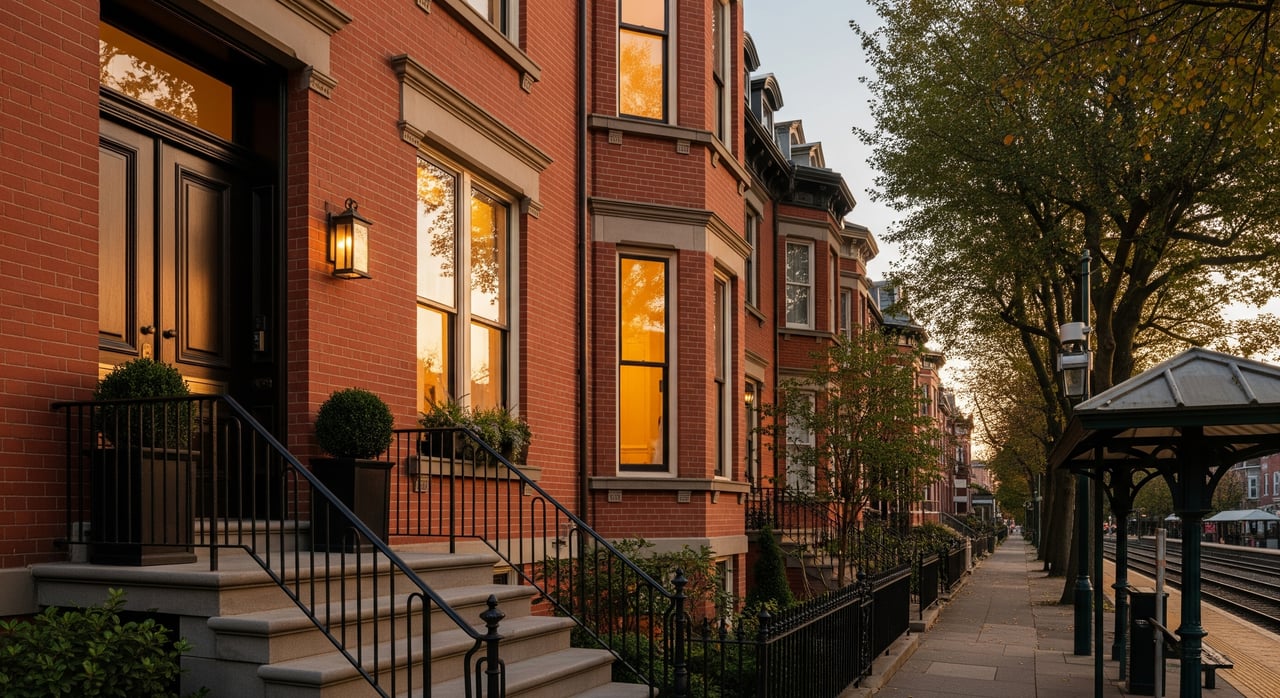
How much is a four-minute walk to the train worth when you sell in Montclair? If you are near Bay Street, Walnut Street, or another Montclair-Boonton Line stop, transit access can boost demand and, with the right strategy, your sale price. In this guide, you will learn how transit proximity influences value, how to price it with confidence, and the marketing details buyers care about most. Let’s dive in.
Why transit proximity matters in Montclair
Montclair is a high-price, still-active suburban market. With recent medians in the roughly 1.0 to 1.3 million range, even a small percentage premium can translate into tens of thousands of dollars. Small percentage changes equal big dollars here.
Six NJ Transit stations serve the township on the Montclair-Boonton Line: Bay Street, Walnut Street, Watchung Avenue, Upper Montclair, Mountain Avenue, and Montclair Heights, with Montclair State University just outside town. These stations connect to Hoboken and, on weekdays, provide Midtown Direct service to New York Penn Station. You can reference the line overview on the Montclair-Boonton Line page.
Bay Street sits within a state-designated Transit Village district, reinforcing the walkable, mixed-use character around the station. Read more about the designation in the NJDOT Transit Village announcement. Downtown station areas like Walnut Street and Montclair Center also score high for walkability. For example, Walnut Street posts very strong metrics on Walk Score. Walkable station access is a real lifestyle advantage that many buyers prioritize.
What the research says
Multiple studies show a measurable price benefit for homes within true walking distance of rail. A widely cited meta-analysis found an average uplift of about 4.2 percent within a quarter mile and roughly 2.4 percent for every 250 meters closer to a station across study samples. Review the summary findings in the Journal of Real Estate Finance and Economics meta-analysis.
Effects vary by property type and price segment. Some research finds stronger premiums for condos and townhomes near busy stations, while high-end single-family homes may show smaller lifts once factors like lot, condition, and architecture dominate value. See cross-segment differences discussed in this study on station accessibility and prices.
Proximity can also bring tradeoffs like noise, vibration, and parking competition. Outcomes depend on station context and service frequency, as noted in this analysis of asymmetric effects around rail. Lastly, the buyer pool in Montclair includes many commuters. Local data show a meaningful share of residents use public transit and average commutes are in the 36 to 38 minute range. You can explore the figures in ProximityOne’s Montclair profile.
Set your price with local comps
Start by measuring the transit premium on the ground. Build a three-radius comp set for the nearest station:
- 0 to 0.25 mile, true walkable distance.
- 0.25 to 0.5 mile.
- 0.5 to 1.0 mile.
Compare price per square foot, days on market, and sale-to-list ratio in each band. The quarter-mile ring is where studies most often find the clearest uplift, which aligns with the meta-analysis on station proximity. In compact Montclair, also control for micro-areas like Walnut Street corridor versus Upper Montclair.
Adjust for your property type and price band. Condos or townhomes right by a station often see strong buyer pull. For high-end single-family homes, confirm the premium with tight comps, since other features may drive most of the value. Let nearby sales set your target, not a generic percentage rule.
Check non-price signals too. Busy station lots, permit waitlists, and visible ridership can validate demand. The Walnut Street Station page lists parking and amenities you can reference in marketing materials.
Pricing tactics that work
If your comps show a clear premium within 0.25 mile, price to capture it without overreaching. In a still-active market, a modest uplift of about 1 to 4 percent above a well-supported baseline can attract buyers who prioritize transit.
Consider two tactical moves:
Price at the top of the competitive range when you have standout advantages like a 3 to 5 minute walk to Walnut or Bay, high Walk Score, and direct Midtown Direct options.
List just under a key threshold to widen the buyer funnel if recent days on market are ticking up or sales over list have cooled locally. Choose based on your comp spread and timeline.
Market your walkability
Lead with verified commute facts. Typical rail times from Montclair stations are commonly around 40 to 50 minutes to New York Penn on Midtown Direct trains and about 30 to 45 minutes to Hoboken depending on schedule. Use current timetables and tools like Rome2Rio’s Montclair to NY Penn overview to cross-check before publishing. Always quote minutes, not just “easy to NYC.”
Show, do not just tell. Include a simple map of the walking route and time, a photo of the station, and highlights of nearby retail like cafés, theaters, and the farmers market. Spotlight commuter-friendly features at home too, like a mudroom, secure bike storage, or dedicated gear area.
Be clear on parking and permits. State whether the property includes off-street or assigned parking and note station lot options, fees, and rules with a link to the appropriate station page when helpful. Reinforce the neighborhood’s long-term walkability context by referencing Montclair’s Complete Streets policy and the Bay Street Transit Village designation.
Address the tradeoffs proactively
Proximity can mean train noise or heavier foot traffic. Test the property during peak hours for sound and vibration. If needed, note upgrades like newer windows or insulation. Do not sidestep obvious issues. Buyers will surface them during inspections.
If you back to the tracks or a busy lot, consider small mitigation steps before launch. Thoughtful landscaping, sound-dampening improvements, or clear instructions on the quietest rooms and outdoor spaces can reduce friction and help preserve your premium at negotiation.
The seller’s transit listing checklist
- Measure walk minutes to the station at a typical commute hour.
- Build 0 to 0.25, 0.25 to 0.5, and 0.5 to 1.0 mile comps with price per square foot, days on market, and sale-to-list ratio.
- Pull the property’s Walk Score and Transit Score and cite them.
- Verify current NJ Transit travel times to NY Penn and Hoboken and include them in the listing copy.
- Document station parking options and permit details that buyers will ask about.
- Photograph the walking route, station, and nearby amenities.
- Prepare a one-page “Transit Facts” sheet for buyers and appraisers.
Defend your price at appraisal
If your list price includes a transit premium, be ready to support it. Provide the appraiser with your radius-based comps that share the same walkability and station access. Include your “Transit Facts” sheet with walk time, verified commute minutes, Walk Score, and station amenities. Tie your valuation to specific, recent, very close comps whenever possible.
Bottom line for Montclair sellers
Transit access is a real, marketable asset in Montclair. The strongest premiums tend to show up within a true short walk, but the size varies by property type and submarket. Price with local comps, market with verified commute facts, and address tradeoffs up front to maximize your result.
Ready to price your walk-to-train home with precision and launch a transit-forward marketing plan? Connect with Joe Simone for a data-backed strategy and premium presentation that drives demand.
FAQs
How close to a station is “walkable” for pricing?
- Research often points to within about a quarter mile as the zone where premiums are most consistent, though you should validate with local comps.
Do all Montclair stations carry the same premium?
- Not necessarily. Premiums vary by station context, service pattern, and nearby amenities, so measure using station-specific comps.
How should I quote commute times in my listing?
- Use minutes to New York Penn and Hoboken from the nearest station, verified against current timetables, and include your property’s walk time to the platform.
What if my home is very close to the tracks?
- Disclose and mitigate. Demonstrate improvements like sound-dampening windows and provide practical notes on the quietest interior and exterior spaces.
Will the premium hold up in appraisal?
- It can when supported by recent, very nearby sales that share the same walkability and station access, plus a concise “Transit Facts” sheet that documents the advantages.