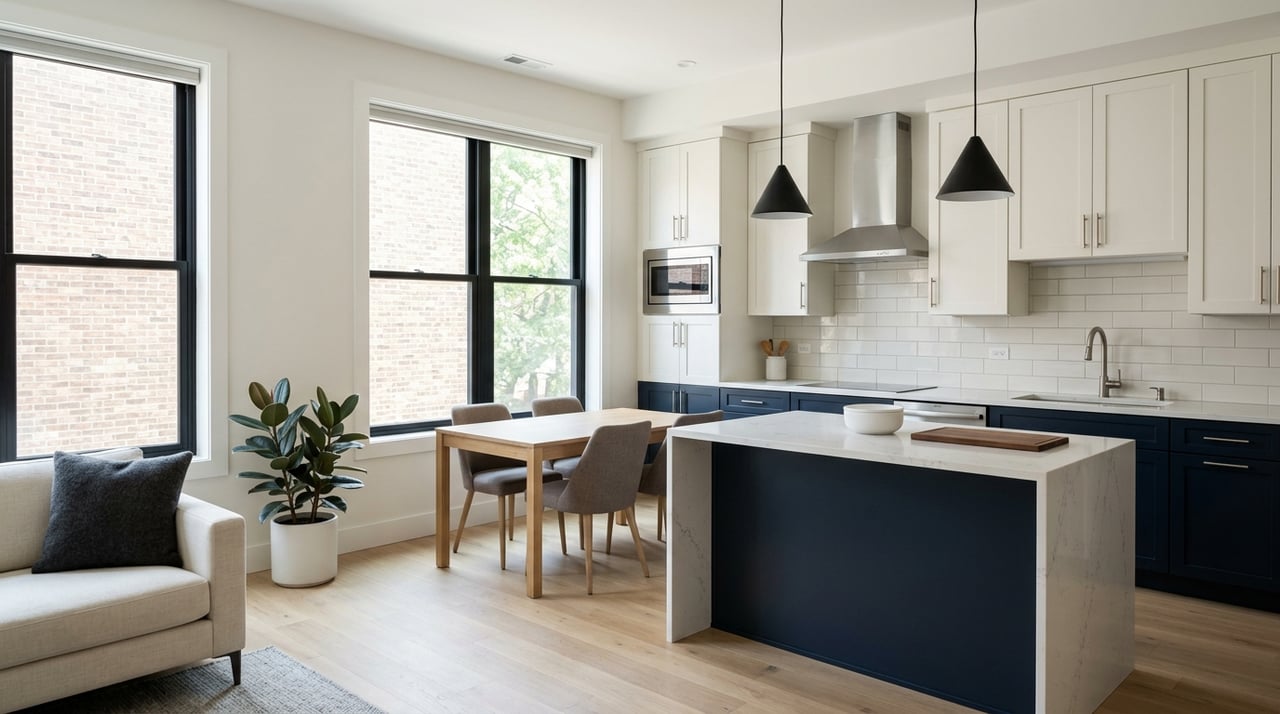
Trying to choose between a condo and a house in Montclair? You are not alone. In a market where prices move fast and monthly costs can vary more than buyers expect, the right fit often comes down to your budget, your lifestyle, and how much time you want to spend on upkeep. If you are weighing convenience against space, or lower entry price against long-term flexibility, this guide will help you sort through the tradeoffs with confidence. Let’s dive in.
Montclair price differences matter
Montclair is a competitive North Jersey market, and the price gap between condos and houses is significant. Redfin reported a March 2026 median sale price of $1.425 million in Montclair, while its condo search showed 18 condos for sale at a median listing price of $489,000. These are not identical metrics, but they clearly suggest that condos are often the lower entry point.
That difference shows up in current listings too. One condo at 41 Glenridge Ave Unit 2L is listed at $245,000, while 29 Up Mountain Ave Unit 2 is listed at $389,000. On the house side, 72 Central Ave is listed at $829,000, and 59 Elston Rd is listed at $1.45 million.
If you are trying to enter Montclair without stretching to a seven-figure purchase, a condo may open the door sooner. If you want more square footage, land, and control over the property, a house may still be worth the higher cost. The key is to look past the sticker price.
Monthly costs tell the real story
A lower purchase price does not always mean a lower monthly payment. In Montclair, your true carrying cost can include mortgage, property taxes, HOA dues, and ongoing maintenance. That is why side-by-side monthly budgeting is more useful than comparing list prices alone.
Property taxes are a major part of the equation. New Jersey reported Montclair’s 2025 general tax rate at 3.516 per $100 of assessed value, with an effective tax rate of 2.160. Using the examples in the research, the annual tax bill at 72 Central Ave works out to about $1,580 per month, while 59 Elston Rd comes to about $2,949 per month.
Condos bring a different type of monthly cost. HOA dues can be modest in one building and substantial in another. In Montclair, examples range from $235 per month at 41 Glenridge Ave Unit 2L, to $578 per month at 29 Up Mountain Ave Unit 2, to $1,057 per month at 530 Valley Rd Unit 2G.
Those higher dues may include more services. At 29 Up Mountain, the HOA covers heat, hot water, garbage, snow removal, and exterior maintenance. At 530 Valley, amenities include 24/7 doorperson service, a pool, and bundled utilities.
Condo ownership means shared upkeep
One of the biggest reasons buyers choose a condo is convenience. Condo ownership usually means the exterior and common areas are jointly owned, and monthly fees often cover exterior repairs, common-area maintenance, and sometimes water, sewer, trash, or amenities. That setup can reduce your direct maintenance burden.
Still, condo fees are not fixed forever. Fees can rise over time, and special assessments can happen. That means a condo may feel simpler from a maintenance standpoint, but it still requires careful review of the building’s finances and long-term planning.
In Montclair, that is especially important because some current condo inventory is in older buildings. For example, 29 Up Mountain was built in 1965 and 530 Valley was built in 1964. Older buildings are not automatically a problem, but they do make reserve funding, repair history, and overall building condition more important to review.
House ownership means more control
If you buy a house, you gain more control over the property. You also take on full responsibility for repairs and upkeep. That includes everything from a leaking faucet to roof work, exterior maintenance, landscaping, and system replacements.
For many buyers, that tradeoff is worth it. A detached house can offer more privacy, more outdoor space, and more freedom to use the property the way you want. In Montclair, that can mean paying for land and yard potential along with the structure itself.
The local examples show that clearly. The home at 72 Central Ave sits on a 4,003-square-foot lot, while 59 Elston Rd sits on about 0.39 acres. If outdoor space and separation from neighbors matter to you, a house may align better with your goals.
Lifestyle in Montclair can shape your choice
Montclair is not just a housing decision. It is also a lifestyle decision. The township highlights its proximity to New York City, active business districts, restaurants, movie theaters, shops, nightlife, and support for walkability and biking.
Montclair has also been designated a Transit Village since 2010. NJ Transit says the Montclair-Boonton Line serves Montclair on weekdays with service to Newark Broad Street, Hoboken, and New York. On weekends, trips to New York require a transfer at Newark Broad Street.
That context matters because condos often line up well with buyers who want easy access to transit and village-style living. The condo examples in the research are all tied to that pattern. One is near Bay Street Train Station, another is near shops, dining, and transportation, and another is blocks from Upper Montclair train station and village.
A house may still give you a strong location, but buyers often choose houses for different reasons. More private space, larger lots, and fewer shared rules tend to be the main appeal. If your day-to-day life revolves around walkability, a condo may make more sense. If your priority is more room to spread out, a house may be the better match.
Resale and financing work differently
When you buy a condo, you are not only buying the unit. You are also buying into the building and association. That matters because lenders review more than your finances when evaluating many condo purchases.
According to the research, lenders may look at the building’s condition, common areas, reserve funds, structural issues, lawsuits, inspections, and any major unresolved concerns. In simple terms, a condo building’s management and financial health can affect both your financing now and buyer demand later.
That is why two similar-looking condos can perform differently in the market. A well-run building with healthy reserves, clear rules, and no major deferred maintenance may be easier for future buyers to finance. A building with weak reserves or ongoing repair issues may create more friction.
With a house, resale usually centers more on the property itself. Buyers will still care about condition, price, lot, and maintenance history, but there is no condo project review layer. That can make the decision feel more straightforward, even though maintenance responsibility is greater.
A simple Montclair decision framework
If you are deciding between a condo and a house in Montclair, these questions can help you narrow the field.
Choose a condo if you want
- A lower entry price than most single-family homes in Montclair
- Less direct responsibility for exterior maintenance
- Proximity to train access, shops, and dining
- Amenities or bundled services that simplify monthly living
- A more lock-and-leave lifestyle
Choose a house if you want
- More private space and more land
- Greater control over the property
- Fewer shared building rules
- Room for yard use, outdoor projects, or future changes
- A housing cost structure without HOA dues
Compare these before you decide
- Full monthly payment, not just list price
- Property taxes
- HOA dues and what they include
- Your likely maintenance reserve
- Building age and reserves for condos
- Roof, systems, and exterior condition for houses
- Parking, pet rules, and association policies for condos
- Lot size and yard upkeep for houses
The best choice depends on time and money
In Montclair, the condo-versus-house question is usually less about which property type is better and more about how you want to spend your money and your time. Condos can offer a lower entry point and less hands-on upkeep, but they come with dues, building rules, and shared financial risk. Houses offer more autonomy and outdoor space, but they typically bring higher taxes, more maintenance, and a larger budget.
If you are weighing both options, a local comparison can make the decision much clearer. Looking at real monthly numbers, commute patterns, and resale considerations side by side is often the fastest way to know which path fits you best. When you are ready to talk through Montclair options in a practical, no-pressure way, connect with Joe Simone.
FAQs
What is the main cost difference between condos and houses in Montclair?
- In Montclair, condos usually have a lower purchase price than houses, but you also need to factor in HOA dues, taxes, and monthly carrying costs before deciding which is more affordable.
Are Montclair condos always cheaper to own each month?
- No. A condo may cost less to buy, but HOA dues can range from a few hundred dollars to more than $1,000 per month, so the total monthly cost is not always lower than a house.
Why do HOA fees matter when buying a Montclair condo?
- HOA fees affect your monthly budget and may cover items like exterior maintenance, heat, hot water, garbage, snow removal, utilities, or amenities depending on the building.
What should you review before buying a condo in Montclair?
- You should review the HOA budget, reserve fund, any special assessments, building condition, parking, pet policies, utility inclusions, and whether the building is likely to be financeable.
What should you review before buying a house in Montclair?
- You should review the property taxes, roof age, mechanical systems, lot size, and the likely ongoing cost of exterior repairs, landscaping, and general upkeep.
Is a condo or house better for walkability in Montclair?
- In many cases, condos are more closely tied to Montclair’s train stations, shops, and dining areas, while houses may offer more private space and land depending on location.